

Dashain–Tihar Hangover, Tree Tomatoes, and Tea Gardens
दशैं–तिहारको हैंगओभर, ट्यामटर, र चियाबारीहरू

“Fortunately, for those who love — really love — good cooking and good food have kept culinary traditions alive. In doing so, not only have their own families benefitted, they also serve as the modern emissaries of our distant relatives, carriers of an ancient secret once intended to be shared only with members of the tribe. Today, we are that tribe.”
— Catherine Shanahan, M.D., Deep Nutrition: Why Your Genes Need Traditional Food
Welcome to Issue #10 of Dal Bhat Stories!
To all my new subscribers — dhanyabaad and welcome. I’m so glad you’re here. Dal Bhat Stories is where we celebrate traditional and modern Nepali foodways and explore why they matter. It’s where I try to translate the tastes I grew up with, the stories I’m still collecting, and the emotions woven into them. It’s also where I challenge the often reductionist lens that sees food in grams and macros rather than culture, landscape, and community. And to those who’ve been here from the start— thank you for walking with me!
Before I share my stories and a recipe, here’s where I have been — and what I have been eating
In the past few weeks away from this newsletter, a lot has happened.Dashain and Tihar, the two biggest festivals in Nepal, have come and gone. I’ve been thoroughly blessed by relatives (the classic Dashain blessing of “May you get married soon”), fed every possible variation of goat meat, sel roti (see picture below of this perfection), and enough sweets to last me till next year. There were also the late-night card games — an essential part of the season.
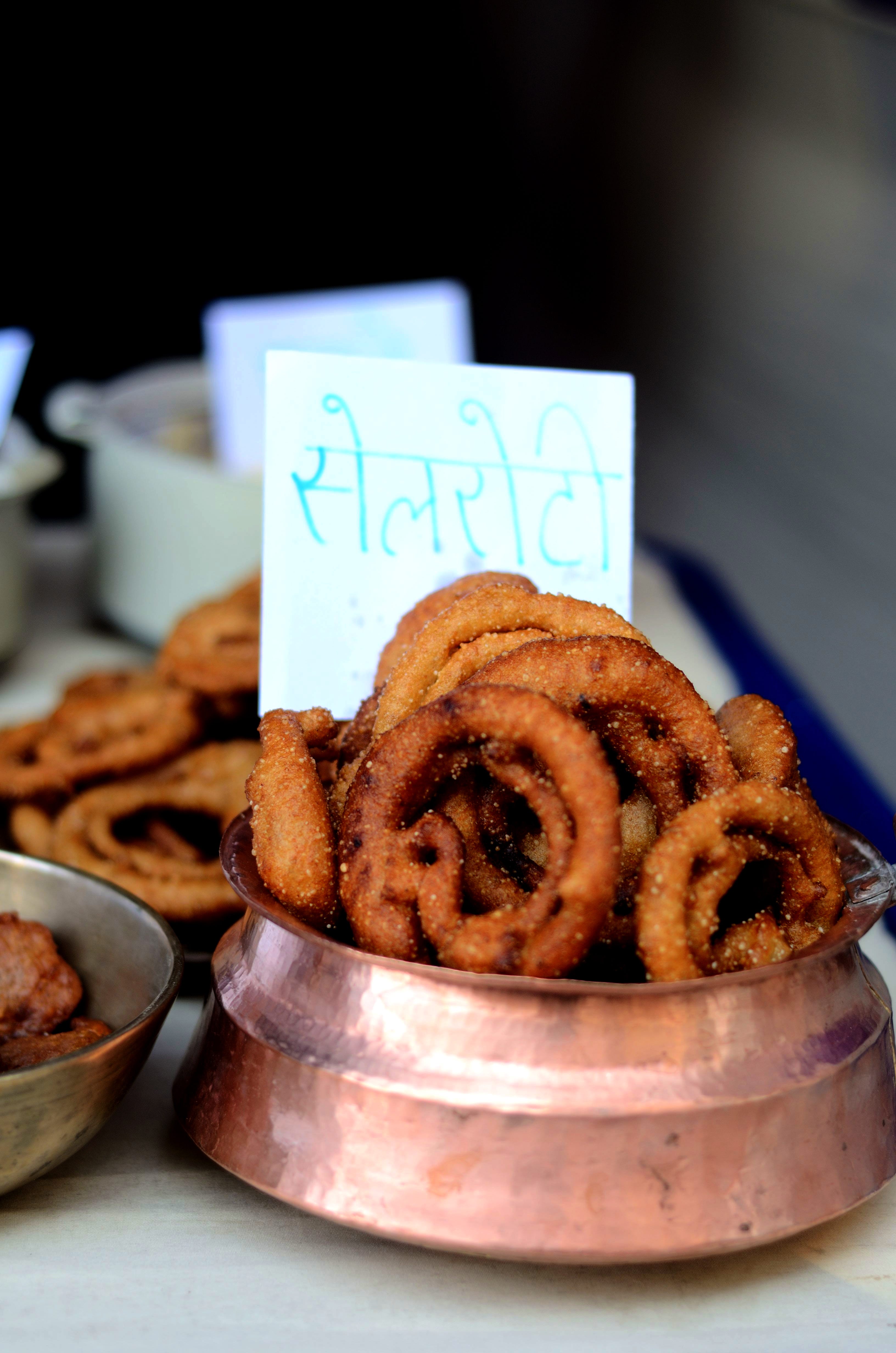
At their heart, Dashain and Tihar are a reminder of how deeply our culture values community and connection; of showing love through food, laughter and blessings, even with relatives you only see once a year.
Of course, there’s another side to it too: the pressure on women to cook, clean, and host endlessly; the constant scrutiny of how you look, what you’re doing with your life, and when you’re finally getting married — all under the soft disguise of “love.” We know how that goes. I sometimes think if the work of hosting and feeding were shared, the food (and the mood) would taste even better.
I rarely eat goat the rest of the year, but during Dashain it’s cooked to perfection — slow-cooked in its own fat, in a heavy brass kasaudi, with just a few spices but a flavor that feels ancient and deep. It’s the kind of dish that feels too special (and too time-consuming) to make at any other time.
And then comes Tihar, bringing with it the smell of sel roti. The smell of this donut-shaped snack freshly fried in ghee — crisp on the outside, soft and slightly sweet inside — is Tihar. I end up eating it only once a year, which somehow makes it even more sacred.
(Photo credit: Sunny Hold/Wikimedia commons)
The Underrated Tree Tomato (with recipe for tyamatar ko achar)
Honestly — why isn’t this fruit hyped up enough? Please tell me.
I didn’t think much about how far its roots stretched until my close friend Sara — who’s from Ecuador — replied to an Instagram story of me standing next to a nanglo full of tyamatar. She told me her grandmother used to make her Tomate de Árbol smoothies when she was younger. That one message sent me down a rabbit hole.
Until then, I’d assumed (incorrectly, as most food assumptions are) that only Nepalis, and maybe people from neighboring regions, ate this fruit. But tyamatar is everywhere — grown and loved from the Andean highlands of Ecuador and Peru to the misty hills of Nepal, and even in New Zealand, where it’s been hybridized, commercialized, and celebrated as a specialty fruit.
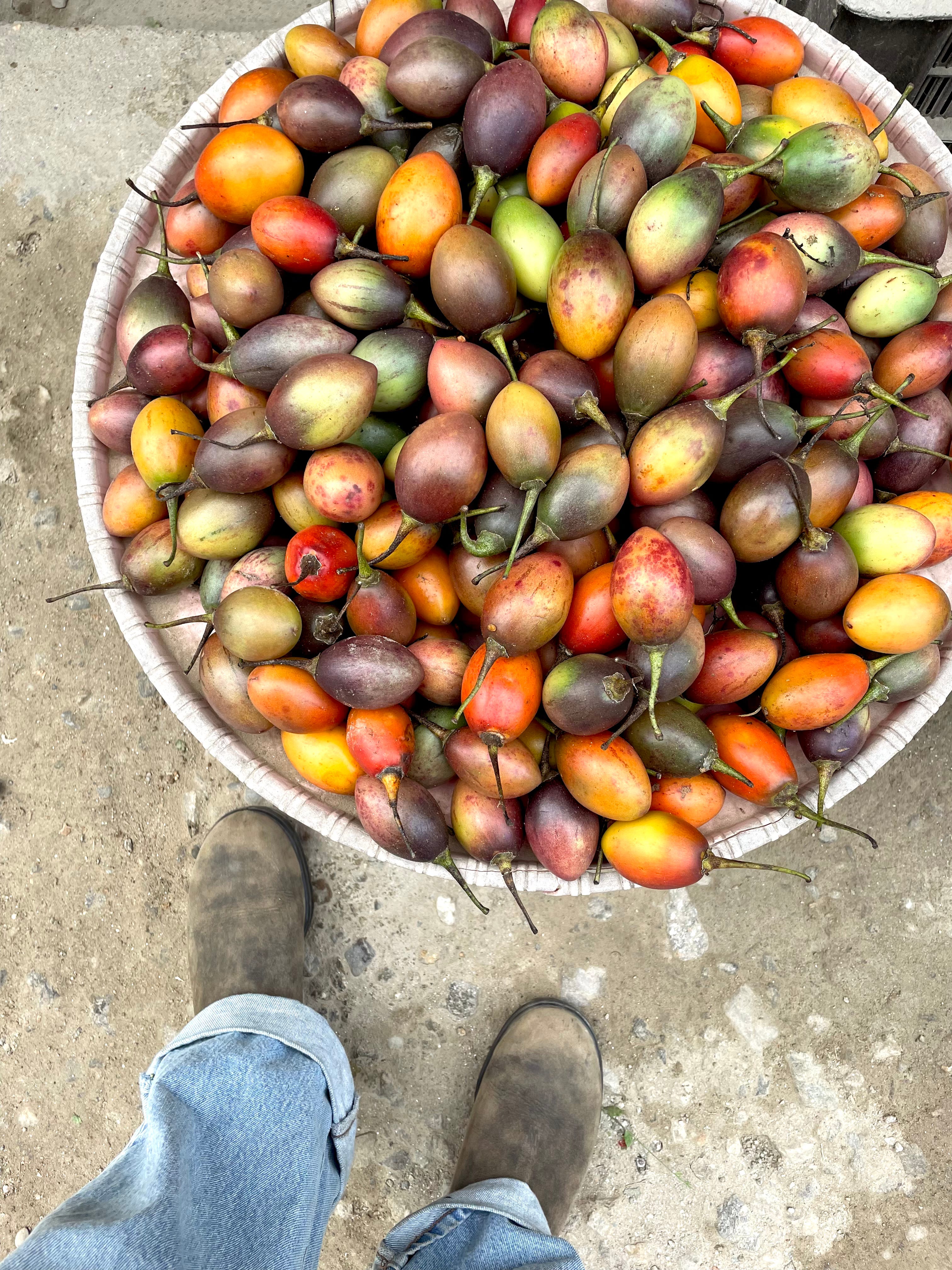
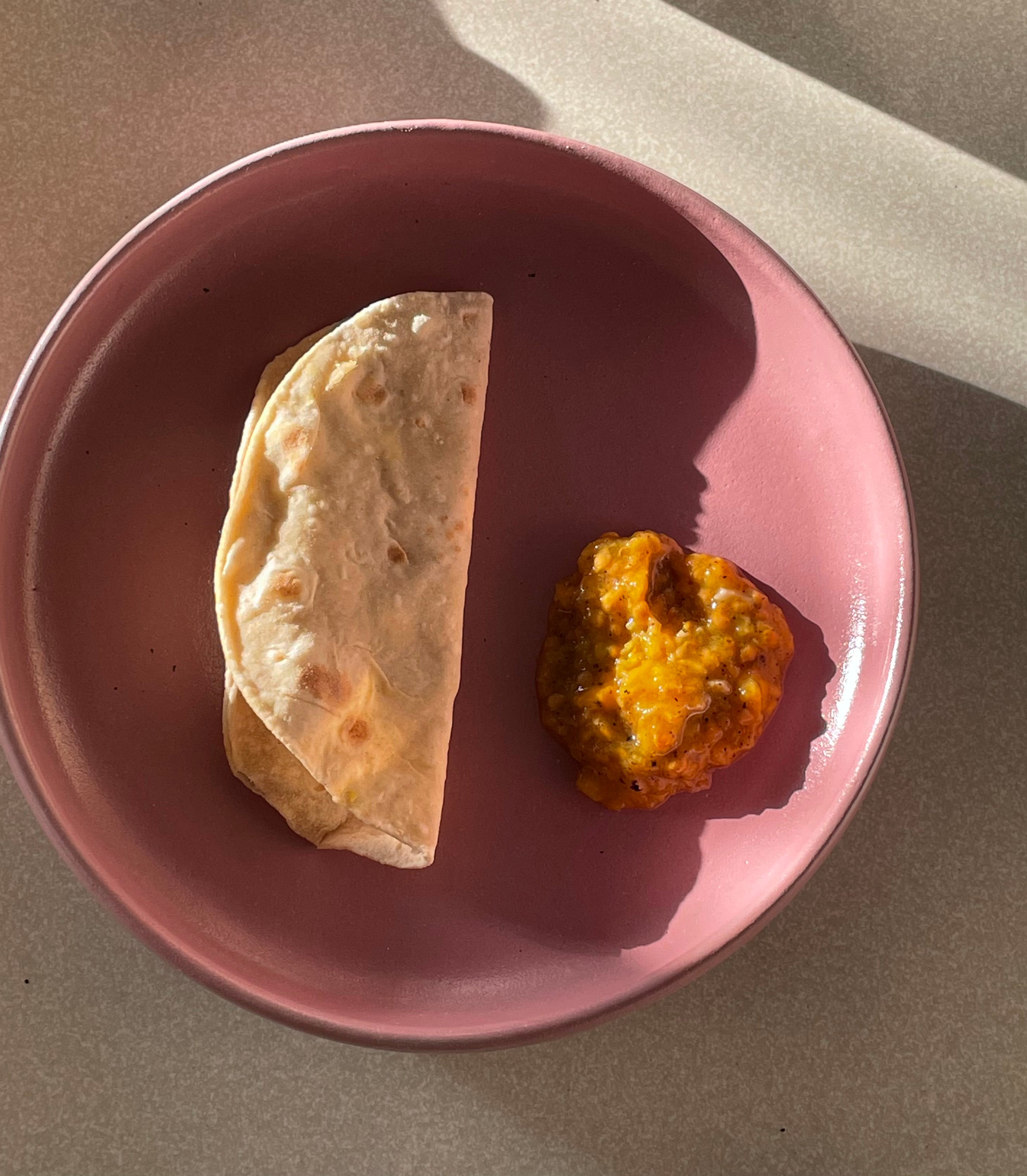
It feels strange calling it a fruit because, in Nepal, we mostly eat it as an achar — a savory, spicy chutney paired with rice or roti, not as a smoothie or dessert. Even the internet can’t quite decide whether it’s a fruit or a vegetable, which makes sense: its flavor is tangy, tart, faintly sweet, and deeply aromatic. It’s my absolute favorite achar ingredient. If a fine-dining restaurant ever decided to feature a tyamatar-based dish, I swear it would be worthy of big bucks.
It’s also an ingredient rarely seen outside home kitchens, which almost makes it feel like a secret — and I don’t like keeping good things secret. So here it is: a small ode to this brilliant, under-appreciated fruit and a recipe for Tyamatar ko Achar from my home.
Recipe: Tyamatar Ko Achar | त्यमाटर को आचार | Tree Tomato Chutney
Serves 2–3 as a side or dip
Ingredients
3 medium-ripe to ripe tree tomatoes (tyamatar)
2 medium cloves garlic
½ tsp timmur (Sichuan pepper) powder
½ tsp black pepper
1–2 dried red chilies (adjust to heat preference)
Salt to taste
Instructions
Roast the vegetables
Set a metal mesh rack or any tongs-safe surface over an open flame of your gas stove. Work carefully here. If you don’t have a gas flame, you can use your oven’s broiler— or simply boil the tyamatar instead.
Place these tree tomatoes and garlic cloves directly over the flame.
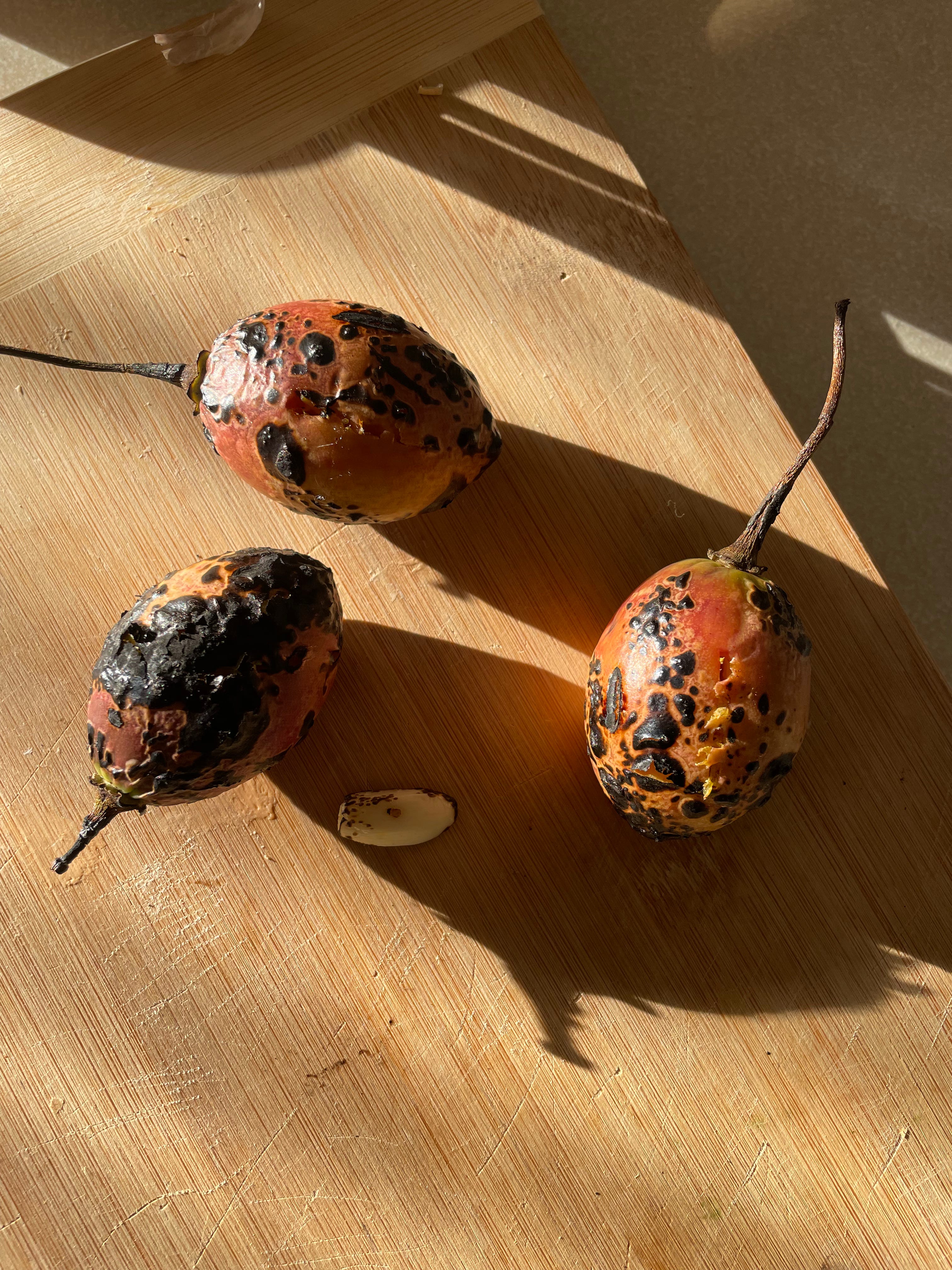
Roast until the tomatoes start to pop, the skin blisters and breaks, and the garlic develops light char spots.
Remove from heat and let them cool for a minute.
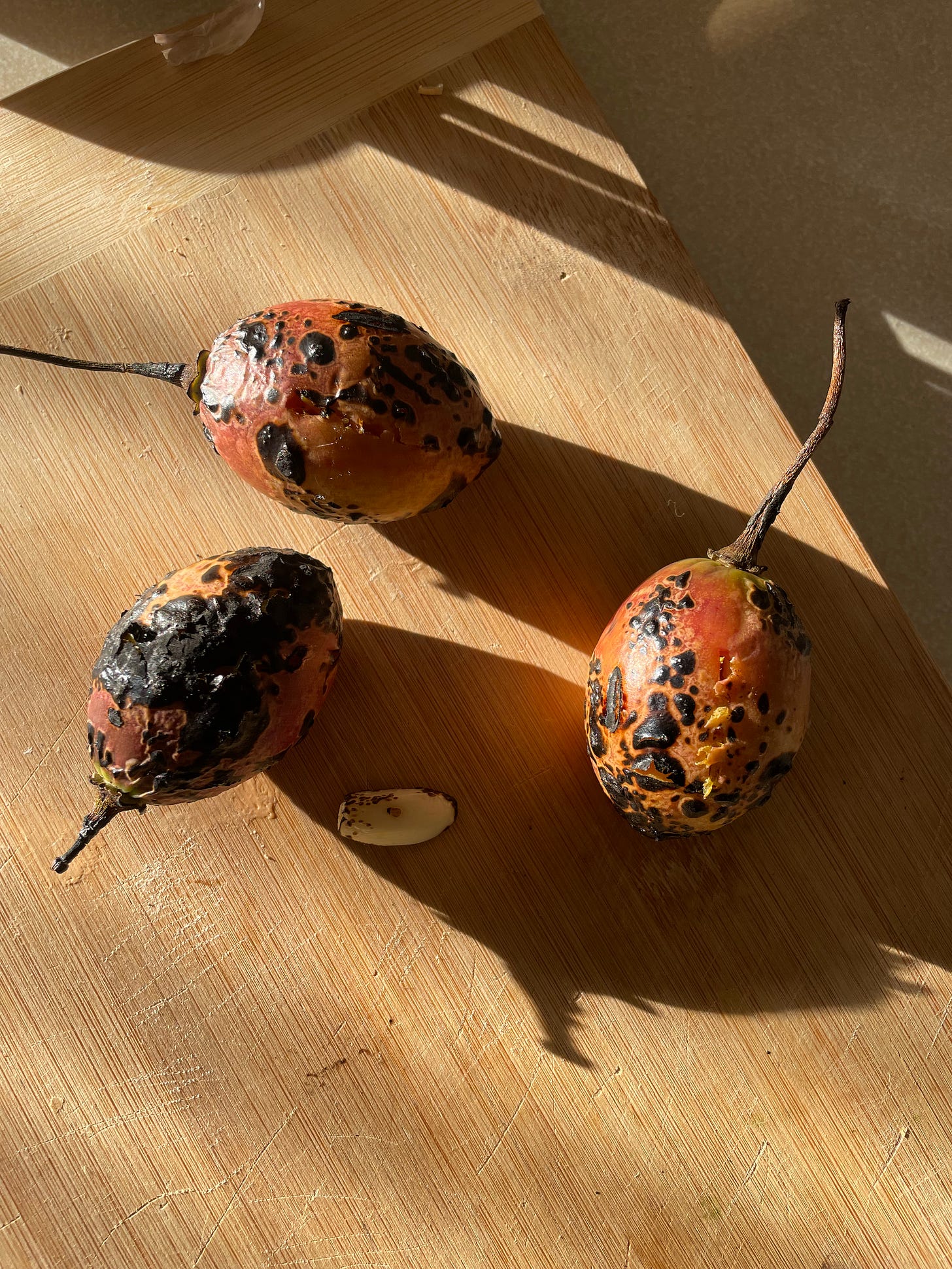
blissful blisters on the tyamatar
Peel and prep
Peel off the blistered skin on the tree tomatoes.
Remove any overly blackened bits of garlic skin.
Make the spice base
In a mortar and pestle, add the timmur powder, black pepper, dried red chili, and salt.
Pound until the spices turn into a coarse, aromatic paste.
Add the roasted garlic and crush it into the mixture.
Mash and mix
Add the peeled roasted tree tomatoes to the mortar.
Smash and mix everything together until you have a chunky, well-incorporated achar.
That was really easy, wasn’t it? Ok now switching gears from tree tomatoes to tea gardens!
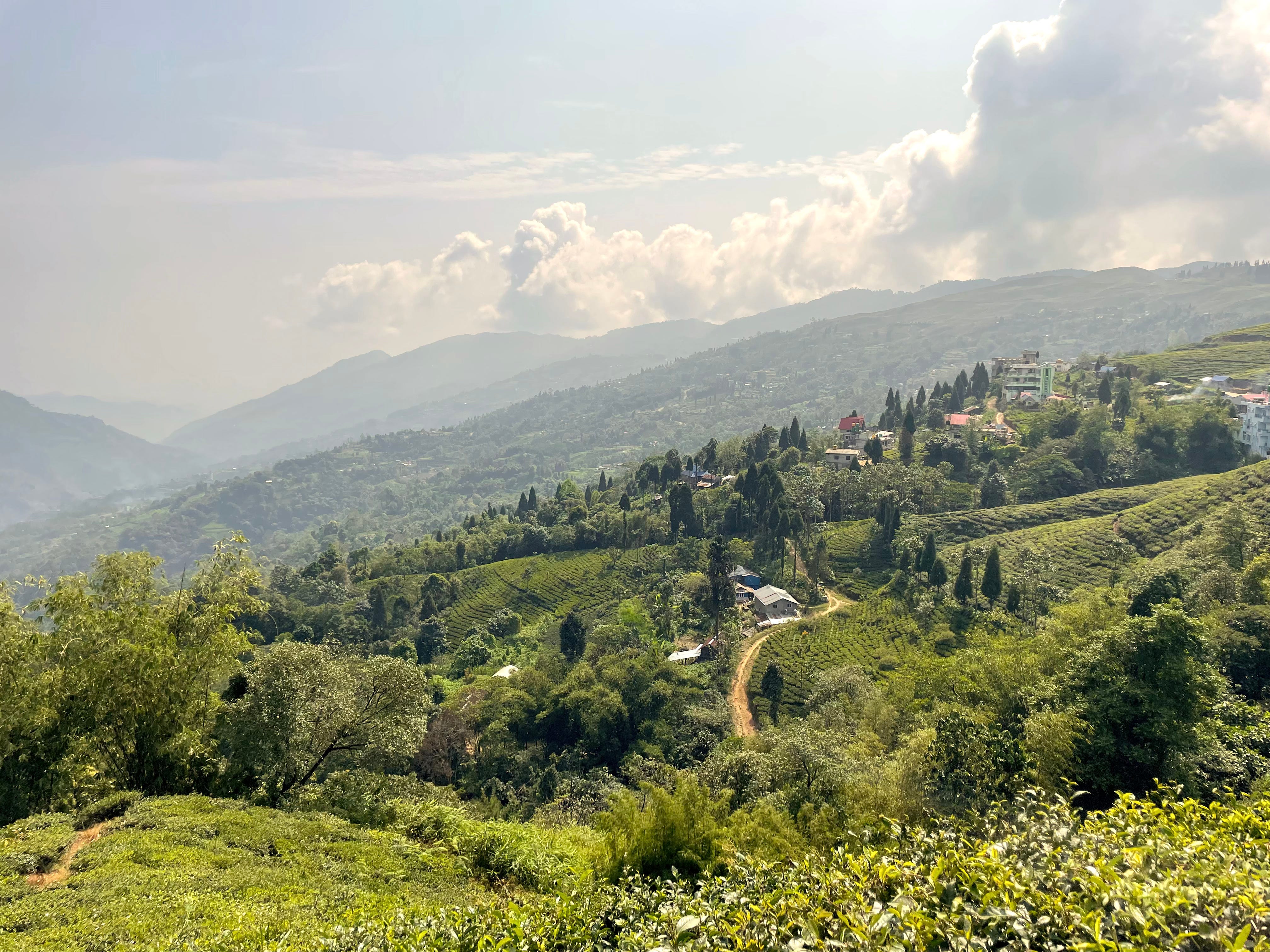
Passing by Illam on a misty evening
Last week, on my way to Darjeeling for a friend’s wedding, I found myself passing through Fikkal, in Ilam — the tea-growing heart of Nepal. As we drove through its winding roads, my friend and I looked at each other and knew we’d have to come back. The tea gardens looked almost otherworldly with the mist curling over the rolling hills, layers of green stretching endlessly, tea pickers moving gracefully through the shrubs with bamboo doko baskets on their backs. It all felt impossibly romantic for a tourist like me.
So we did exactly that. We left Darjeeling early, returned to Ilam, and spent a night walking through the tea gardens, sipping fragrant local black tea, watching the mist drift in and out of the hills. The quiet felt was such a good pause — the kind of pause Robert Frost captures in “Stopping by Woods on a Snowy Evening.” Hence the title of this section.
I tried to capture the feeling of being there on my old iPhone, but as always, photos never really do it justice. Being there also stirred up questions I haven’t stopped thinking about:
Are the tea pickers paid fairly?
How difficult is the job?
Who owns these lush hills?
Where do these teas travel once they leave Nepal — and which ones are considered the best?
I’m still exploring these questions, and maybe I’ll write about Nepali tea stories in another issue. But for now, here’s a small glimpse of the quiet, grounded beauty of Fikkal, Ilam.


This is such a beautiful piece! Has gotten me even more excited to come homeeee! Especially to YOUR COOKING <3
Can't wait to try some Tyamatar Ko Achar!